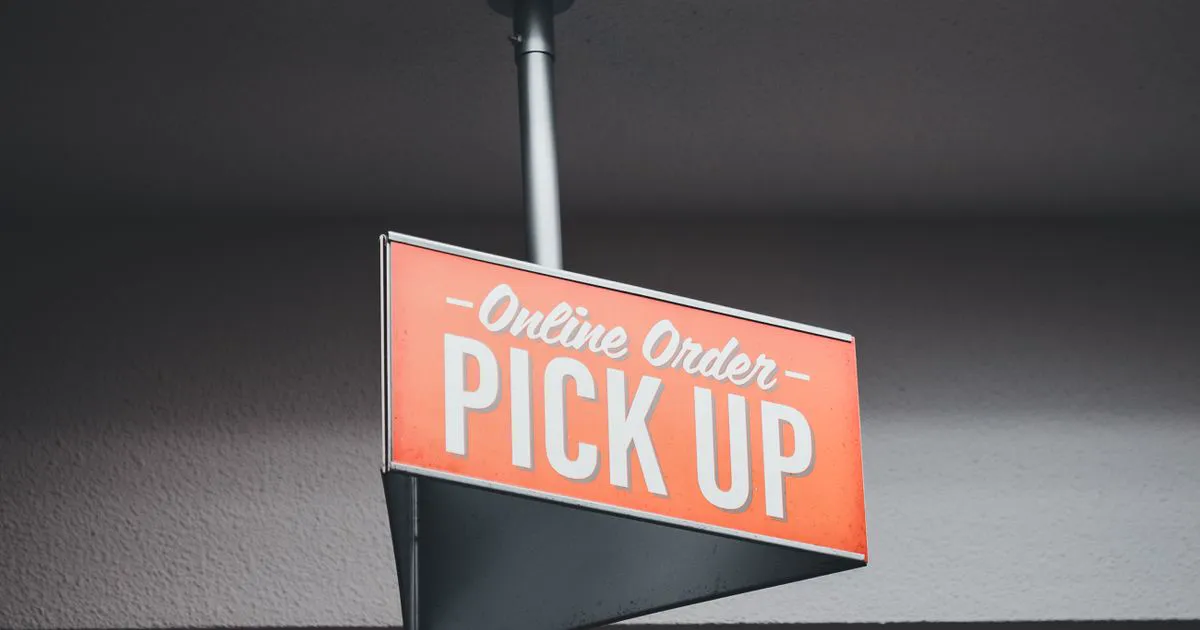
Walk into most independent restaurants at 7pm and you can see the shift without anyone explaining it: a shelf by the door stacked with bagged orders, three delivery tablets chirping out of sync, and someone at the pass trying to answer a ringing phone with their elbow. Off-premise stopped being a side channel years ago. It is now a second restaurant running inside the first one, on the same kitchen, with the same staff.
AI is being sold hard into that gap right now. Some of it is real and some of it is a demo. Here's an operator's read on what is actually changing about takeout and off-premise ordering in 2026 — and, just as usefully, what isn't.
The real off-premise problem isn't demand — it's fragmentation
Almost no independent restaurant is short of takeout demand. What they're short of is a single place where takeout happens. A typical Friday order might arrive through any of:
- Two or three delivery marketplaces, each with its own tablet and its own commission.
- A direct online ordering page, if the website has one that works on a phone.
- The phone — regulars, large orders, anyone with a question or a modification.
- Walk-in pickup, ordered at the counter by someone who is now standing in front of you.
Every one of those channels has been modernized over the last decade except the phone. The tablets at least beep. The phone just rings until someone gives up — usually the caller, sometimes the restaurant. That's the crack most of the current AI wave is actually being poured into.
Four places AI is genuinely landing
1. Answering the phone at peak
The most concrete change is the least glamorous one. Voice AI can pick up every call at once, which means the 6:45pm pile-up simply stops existing as a queue. It takes the order, reads it back, and drops it into the same place your other orders land. This is where the technology is most mature, because the job is narrow: your menu, your hours, your modifiers.
2. Turning conversations into structured orders
The harder and more interesting shift is that speech is now reliably convertible into a structured order — item, size, modifiers, quantity, pickup time — rather than a note someone has to re-key. That structure is what lets a phone order behave like an online one: it can be priced, confirmed, sent to the kitchen, and pushed into your POS without a second pair of hands.
3. Consistency on the boring parts
An AI doesn't forget to ask whether the order is pickup or delivery, whether they want the raita, or what name it's under. Human staff don't forget either — until it's the fortieth call of a rush and the fryer alarm is going. Consistency at hour three of a shift is a genuine machine advantage, and it shows up as fewer wrong bags on the shelf.
4. Finally having phone data
Most operators can tell you their delivery-app numbers to the dollar and have essentially zero data about their phone. Transcribed, logged calls change that: what people called about, when the calls stacked up, which items get asked about and never ordered. It's the first time the phone channel produces the kind of reporting the tablets have always had.
What AI does not fix
Being honest about the ceiling here matters more than the pitch, because the failures are predictable:
- Bad menu data stays bad.If your item names, sizes, and modifiers are inconsistent, an AI will reproduce that inconsistency faithfully and at speed. Menu structure is the actual prerequisite, and it's work.
- Kitchen capacity is still kitchen capacity.Capturing more orders during a rush you're already drowning in isn't automatically a win. Quoted times have to reflect reality or you've just moved the failure downstream.
- Marketplace economics don't change. Commission on third-party orders is a contract question, not a technology one. AI on your own line can shift mixtoward direct orders over time; it doesn't renegotiate anything.
- Hard calls still need a person. A complaint, a $600 catering order, a confused first-time caller — the right behavior is a fast handoff, not a heroic bot. Any vendor who tells you the AI handles everything is selling you the demo, not the Friday.
- Noise and accents are real constraints. Accuracy has improved a lot, but a loud dining room and an unfamiliar accent are still the conditions where these systems are weakest. Test in your own room, not in a quiet one.
What this means for how you set up 2026
If off-premise is a meaningful share of your revenue, the useful moves this year are mostly unsexy:
- Clean up the menu data first. One canonical menu, consistent names, explicit sizes and modifiers. Everything downstream — online ordering, POS, any AI — inherits it. We wrote up the specifics in how AI order taking works.
- Count your phone. One dinner service, a clipboard, a tally of what callers actually wanted. You cannot size the problem without it — the hold-time playbook walks through the method.
- Make the phone a channel that produces data. Whatever you use, insist on transcripts and call logs. Untracked channels get under-managed.
- Push order flow toward your POS, not a second screen. Another tablet is a step backwards. If phone orders can land in the POS you already run, that's the version worth having.
- Judge tools on your worst call, not your best. The ordinary two-item pickup is easy. Try the substitution, the half-and-half, the caller who changes their mind at the end.
The direction of travel
The trend worth naming isn't “AI takes orders.” It's that the phone is being pulled back into the same system as everything else — priced, structured, logged, integrated — after fifteen years of being the one channel that lived outside it. That's a quieter change than the headlines suggest, and a more durable one. It also happens to be the channel where your highest-value, highest-margin orders tend to come from: the regulars, the big family pickups, the catering.
Where Depla fits
Depla is an AI voice employee for exactly this: it answers every call on the first ring, takes full pickup and delivery orders against your own menu, quotes a realistic time based on your hours, and hands off to a person when a call needs one. Orders and transcripts land in one dashboard, and can push into your POS. It speaks English, Hindi/Hinglish, Spanish, and French on every plan, which matters if your callers do.
See the mechanics on the order taking page, the flat monthly plans on pricing, or the wider picture in our 2026 restaurant technology trends rundown. Better still, try the live demoon your own menu and give it your most annoying takeout order — that's the only test that tells you anything.